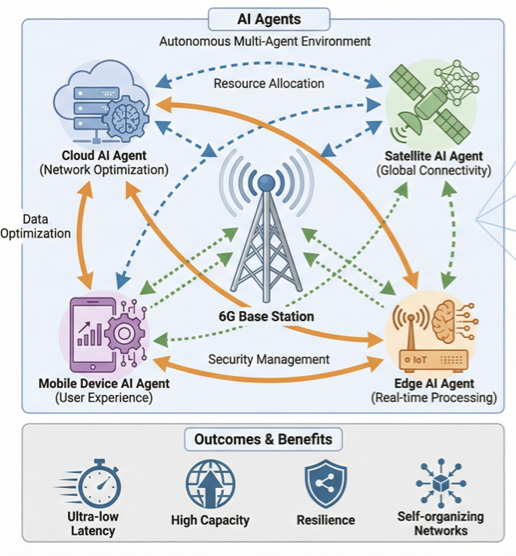
As AI‑driven services scale across networks, devices and data centers, understanding their hidden impacts and redesigning architectures for sustainability and sovereignty becomes critical. CTTC addresses this challenge through eco‑friendly AIoT platforms, energy‑efficient digital twins and next‑generation Agentic AI architectures for 6G.
Meet GAIA: Eco-Friendly AIoT Platforms to Cut Tech’s Carbon Footprint
Under the GAIA initiative, coordinated by UOC with CTTC as a key partner, researchers are developing energetically passive, biodegradable and bio‑based IoT systems that can be seamlessly embedded into objects. The project aims to deliver a functional prototype for smart logistics and cold‑chain monitoring, aligning IoT deployment with European objectives on sustainability, circularity and technological sovereignty.
The CTTC will revolutionize Internet of Things (IoT) by developing energetically passive, biodegradable and bio-based systems that seamlessly integrate into objects. Coordinated by the Universitat Oberta de Catalunya (UOC), the project will build electronic, telecommunications and learning systems on biodegradable substrates, creating a functional prototype applied to smart logistics and cold chain monitoring. By doing so, the project will move towards the Internet of Things with almost zero cost and minimal environmental impact, this being aligned with the European objectives of sustainability, circularity and technological sovereignty.
Sustainable and Sovereign AI for Enterprise with Lightweight Digital Twins
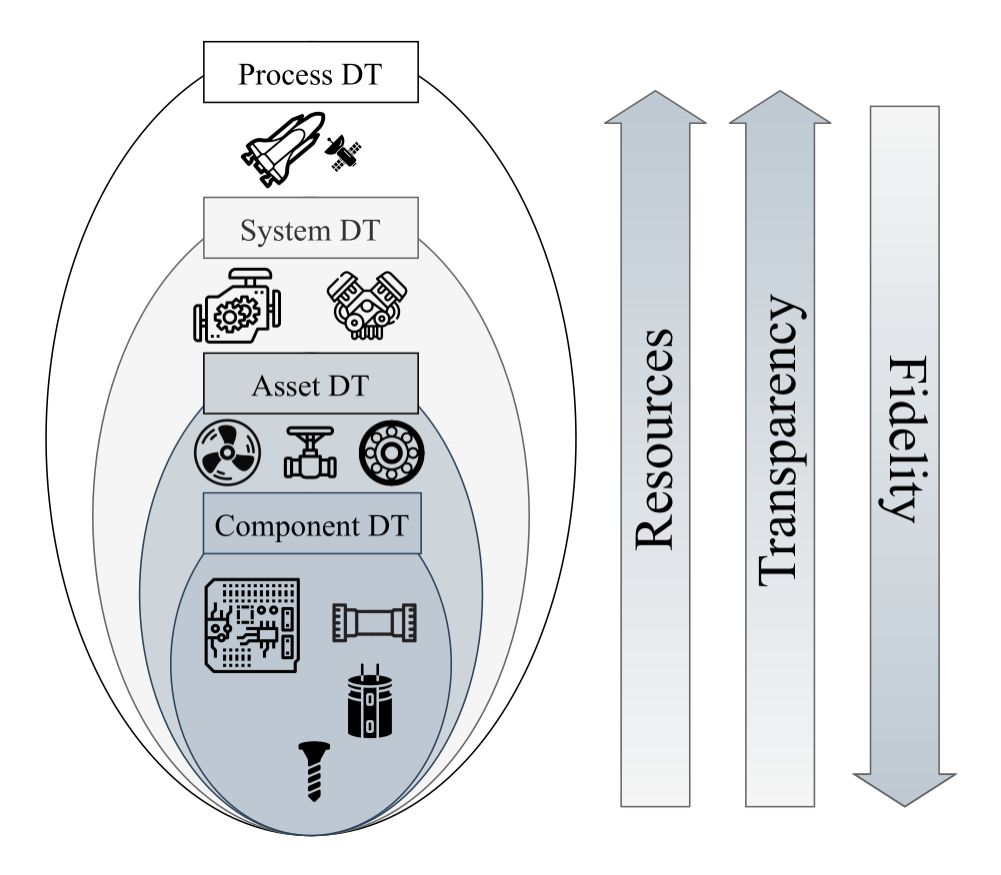
CTTC proposes lightweight AI architectures based on Reservoir Computing and spiking neural networks to move away from today’s energy‑intensive AI paradigm. Experiments show that the RC‑based digital twin approach can reduce energy consumption by an order of magnitude while improving accuracy by up to 39% compared to conventional models, supporting more sustainable, sovereign and transparent AI deployments for enterprises and SMEs.
The CTTC is advancing an innovative AI approach aimed at enabling lighter, more energy-efficient models to help shift away from today’s energy-intensive AI paradigm. The work focuses on efficient AI architectures based on Reservoir Computing (RC) and spiking neural networks, designed to operate in fully decentralised, peer-to-peer environments where edge devices collaboratively process data regardless of their resource constraints.
Experimental results demonstrate that the proposed RC-based digital twin approach consumes an order of magnitude less energy while achieving up to 39% higher accuracy than conventional AI models. In parallel, printed electronics are being integrated to support more sustainable device manufacturing, promoting regenerative design principles, circularity, and sufficiency. This breakthrough is expected to lower barriers for SMEs and small research teams, strengthen technological independence, and accelerate the adoption of transparent, eco-friendly, and trustworthy AI solutions.
CTTC leads the desig 6G Agentic AI architectures teams with Nearby Computing and the Barcelona Supercomputing Center
Together with Nearby Computing and BSC, CTTC is defining Agentic AI architectures for 6G, where distributed cognitive agents cooperate across network, service and compute domains. The concept of Domain Agentic Systems replaces rigid centralised control with modular, intent‑driven multi‑agent subsystems, enabling real‑time adaptation, self‑healing and zero‑touch orchestration across the edge–cloud continuum in line with emerging 3GPP principles.
CTTC, Nearby Computing and Barcelona Supercomputing Center (BSC) have teamed up to unveil a bold vision for the future of 6G: autonomous, multi-agent orchestration driven by Agentic AI. The collaboration introduces a new intelligence layer where distributed cognitive agents reason, negotiate and act collaboratively across network, service and compute domains. At the core lies the concept of Domain Agentic Systems, modular, intent-driven multi-agent subsystems that replace rigid, centralized control with scalable, self-optimizing intelligence. This architecture enables real-time adaptation, self-healing and zero-touch orchestration across the edge–cloud continuum, fully aligned with evolving 3GPP principles.
By combining shared knowledge, secure agent-to-agent communication and policy-aware decision-making, the orchestration bottlenecks and single points of failure could be overcome. The result: faster service deployment, higher resilience, and smarter use of network and compute resources, even under highly dynamic conditions. From RAN slicing to cross-domain service composition, multi-agent collaboration unlocks capabilities unattainable with single-agent or rule-based systems. Together, CTTC, Nearby Computing and BSC have set a roadmap to showcase how Agentic AI transforms 6G from automated networks into truly autonomous systems, setting a new benchmark for innovation beyond 5G.